You know it almost immediately.
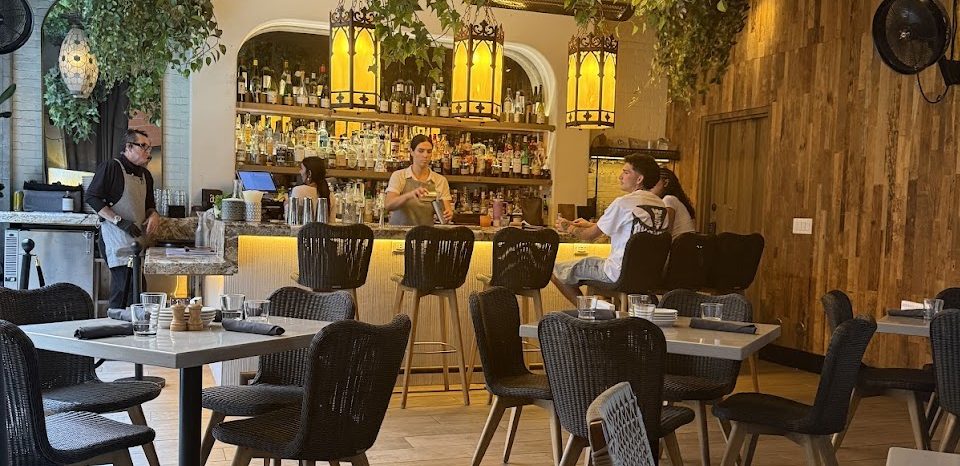
You walk into a restaurant, bar, coffee shop, bookstore, or hotel and think: Oh. This place is cool.
The lighting is great. The music is perfect. Everyone sitting at the bar somehow has their own distinct personal style. Whatever it is, you want to stay.
There isn’t really a formula for cool. If there were, every new restaurant with dim lighting, tiny lamps, vintage furniture, and a martini on the menu would feel exactly the same.
So what actually makes a place feel cool?
It Has a Point of View
The coolest places know exactly what they are.
Every coffee shop doesn’t need to become a coworking space, natural wine bar, vintage store, and listening lounge all at once.
There is something appealing about a place that has made decisions.
Maybe the menu is unusually small. Maybe the walls are covered in decades of photographs. Maybe they only play jazz. Maybe the restaurant hasn’t changed its sign since 1987.
Whatever the choices are, they feel intentional.
You get the sense that someone behind the place has taste, preferences, and perhaps even a few strong opinions.
Not Everything Matches
Interesting places usually have a little friction.
The chairs don’t quite match. There’s an old sign that doesn’t fit the new branding. The bathroom is covered in stickers. A strange painting has been hanging behind the bar for so long that nobody remembers where it came from.
It feels collected rather than decorated.
People Actually Use It
A room can be beautifully designed and still feel completely dead.
Cool places tend to have evidence of life.
Someone is reading at the bar. Two friends have clearly been sitting in the corner for three hours. The bartender knows the person who just walked through the door.
People aren’t simply passing through the space. They’re participating in it.
It Has Its Own Little Rituals
Great places develop lore.
There’s the thing you have to order. The table everyone wants. Tuesday trivia. Sunday jazz. The owner who sits at the end of the bar.
None of these things can really be manufactured. They happen because people return often enough for traditions to form.
Eventually, the place develops its own tiny culture. And being let into that culture feels good.
It’s Not Completely Optimized
Modern businesses are very good at removing friction.
Order from your phone. Join the waitlist online. Scan the QR code. Reserve your table. Customize everything. Get in. Get out.
Convenience is great. It’s also not particularly memorable.
Some of the places we become most attached to have quirks. Maybe you have to wait for a table. Maybe there’s one thing on the menu that always sells out. Maybe the building is old and the layout makes absolutely no sense.
There is obviously a limit here. Terrible service isn’t charming, and nobody has ever developed a sentimental attachment to a broken air conditioner in August.
Still, a little imperfection can make a place feel human.
You Feel Like You Found It
This might be one of the biggest parts of coolness.
Discovery.
You turn down a street you’ve never walked before and find a tiny bar. A friend tells you about a restaurant you somehow haven’t heard of. You wander into a bookstore because you had 20 minutes to kill.
Suddenly, it feels like your place.
Never mind that it has 40,000 Instagram followers and a two-hour wait on Saturdays.
Discovery doesn’t necessarily mean something is secret. It means your relationship with it feels personal.
There’s a big difference between knowing somewhere is popular and feeling like you’ve found somewhere you want to return to.
The People Matter More Than the Furniture
The personality of a place ultimately comes from the people inside it: owners, employees, bartenders, servers, neighbors, customers, and whoever has somehow become part of the furniture.
That’s why a beautiful restaurant can feel strangely forgettable while a slightly run-down neighborhood bar can become somewhere people love for decades.
The room matters.
The people give the room a life.
You Can Imagine Becoming a Regular
Maybe this is the actual test.
When you find somewhere you really like, you don’t just want to visit once.
You start imagining a relationship with it.
You think about coming back next Sunday. You notice which seat you’d want at the bar. You wonder whether it’s quieter on Wednesdays. You remember something else on the menu you want to try. Eventually, the person behind the counter recognizes you.
Then they know your order.
Then one day someone asks where your favorite place in the neighborhood is, and you realize you have an answer.
Cool places make you want to belong to them a little.
Cool Isn’t an Aesthetic
The places that stick with us usually have something harder to replicate: history, personality, people, rituals, imperfections, and a clear sense of themselves.
Maybe that’s why trying to manufacture cool so often has the opposite effect.
A genuinely cool place has enough of its own identity that it doesn’t seem particularly concerned with whether you think it’s cool at all <3
Leave a Reply